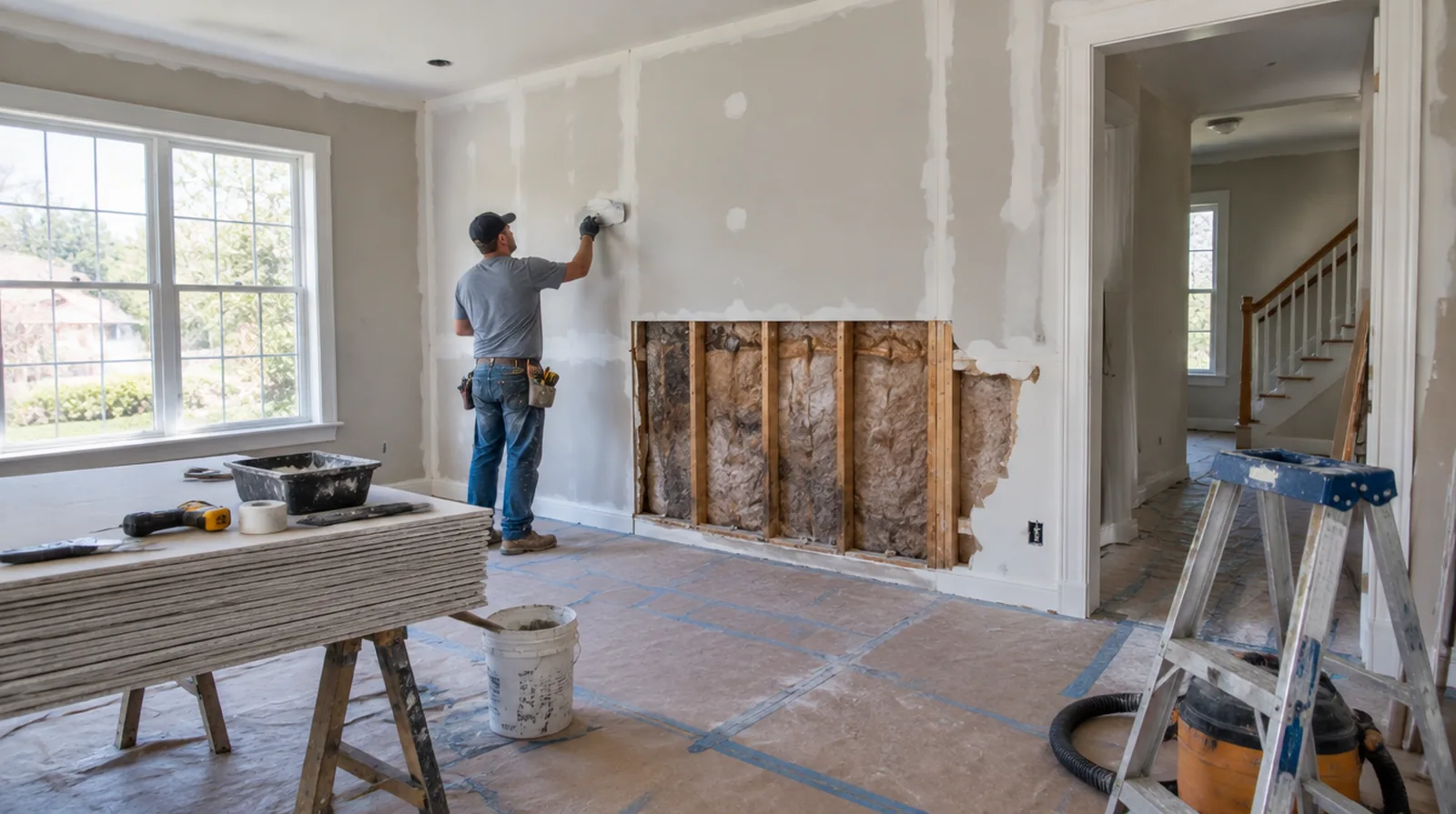
Agree on decorative boundaries
Repairing the damaged board and restoring a uniform paint finish are related but distinct tasks. Talk through a larger painting boundary if local decoration would leave a conspicuous difference around the patch. If scheduling is the main concern, separate hands on labor from drying intervals instead of treating every visit as a full day of active work.
Finish after moisture control
Tape and joint compound belong on stable dry material instead of a damp or deteriorating substrate. Give each finishing layer time to dry rather than trapping dampness under additional material. When a quote includes multiple visits, ask what happens during each stage and when the space needs to remain undisturbed between coats.
Match the board assembly
Use replacement panels consistent with the original thickness and the assembly that must be restored. Changing to a moisture resistant board does not excuse leaving the original water problem unresolved. When a wall has repeated defects, keep a record of earlier repair attempts so a new assessment does not simply repeat an unsuccessful approach.
Treat remaining discoloration
Suitable primer may be needed to prevent old water marks from bleeding through the new paint. Establish that the stain is inactive before choosing a coating system for the repaired surface. For a limited patch requiring substantial setup, assess the complete package of access and protection instead of relating cost only to the opening size.
Resolve the water source
A leak or condensation problem must be addressed before replacing the affected drywall. A cosmetic cover will not stop water from entering the same assembly again. If the original finish is unusual, keep a small reference sample or a close photograph to support the discussion about blending and restoration.
Inspect concealed components
Insulation, electrical work and plumbing exposed during removal may require separate assessment or replacement. Those decisions should be resolved before the drywall portion of the repair moves forward. When the same defect has returned, share information about previous repair methods so the next assessment can consider why they did not last.
Assess material condition
Staining, swelling, softened edges and loose paper help determine which panels might need removal. The affected material behind the finish may extend past the stain seen from inside the interior. In a room with little free floor space, identify temporary storage for belongings and establish sufficient clearance for the work before delivery.
Verify drying readiness
A dry looking outer face does not prove that concealed framing and insulation are ready to enclose. The project should identify who verifies the cavity is ready before replacement panels close it again. If access passes through a shared space, arrange protection and a delivery route that do not unnecessarily obstruct other occupants.
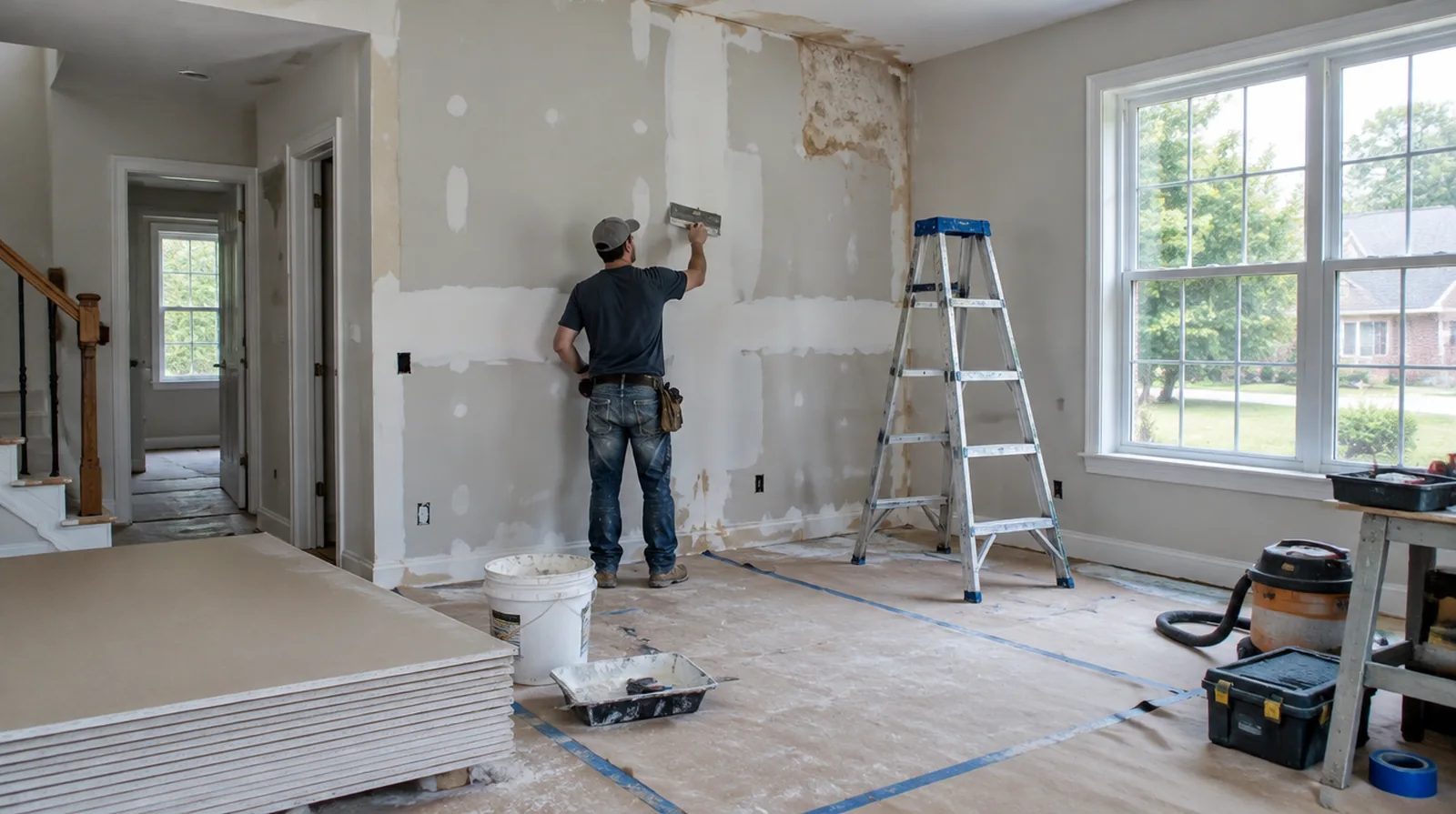
Keep contamination separate
Flood water and suspected microbial growth require evaluation beyond ordinary cosmetic patching. Ask an appropriate remediation professional about containment and material handling before drywall work is scheduled. When painting is outside the proposal, describe the remaining decorative preparation clearly so another contractor can price that stage accurately.
Record the completed scope
Retain useful information about source repairs, material replacement and any drying checks performed by other trades. This record helps explain what the drywall repair covered and what maintenance remains the property owner responsibility. At a surface receiving strong window light, review a dried trial from the side in addition to the normal straight view of the wall.
Project context in Hoover
Agree on how the finished wall should look from the front door and the stairs before the final coat goes on. High windows in Hoover family rooms throw raking light across big walls, which shows small ridges in a finished joint.
Scope questions before finishing
If the project is part of a larger remodel, settle the sequence with flooring, trim and cabinet work before setting a final finishing date.
When photographs are used for an initial discussion, include a wide room view as well as a close view so scale and surrounding finishes are understandable.
For a limited patch requiring substantial setup, assess the complete package of access and protection instead of relating cost only to the opening size.
For a surface that will receive wall covering, share the product requirements early so the finishing stage supports the planned decorative treatment.
Before comparing two proposals, check that both include the same protection, finishing and cleanup boundaries instead of comparing totals alone.
If the problem developed after another renovation, explain which nearby materials or building systems changed before the damage became visible.
If the proposal requires return visits, identify the purpose of each stage and the intervals during which finishing material needs to remain undisturbed.
At a ceiling or wall containing fittings, assign removal and reinstatement duties for the affected devices before repair access is needed.
If scheduling is the main concern, separate hands on labor from drying intervals instead of treating every visit as a full day of active work.
Where several contractors share the renovation, identify the inspection and handover milestones that determine when each following stage can proceed.
At an edge beside built in furniture, state whether the obstruction will be removed or whether finishing stops at the section that can be reached.
At a repair beside an opening, allow clearance for moving board through the doorway and space to use the finishing tools effectively.
Explore the Hoover drywall overview for related options, or read the project planning information before arranging the next stage.
More planning details for Hoover
Bonus rooms over garages see wide temperature swings, which can crack seams where the knee wall meets the slope. HOA communities in Hoover may limit contractor parking or working hours, so check the rules early. Steep driveways on Hoover hillsides can make unloading board harder, so pick a staging spot before delivery.