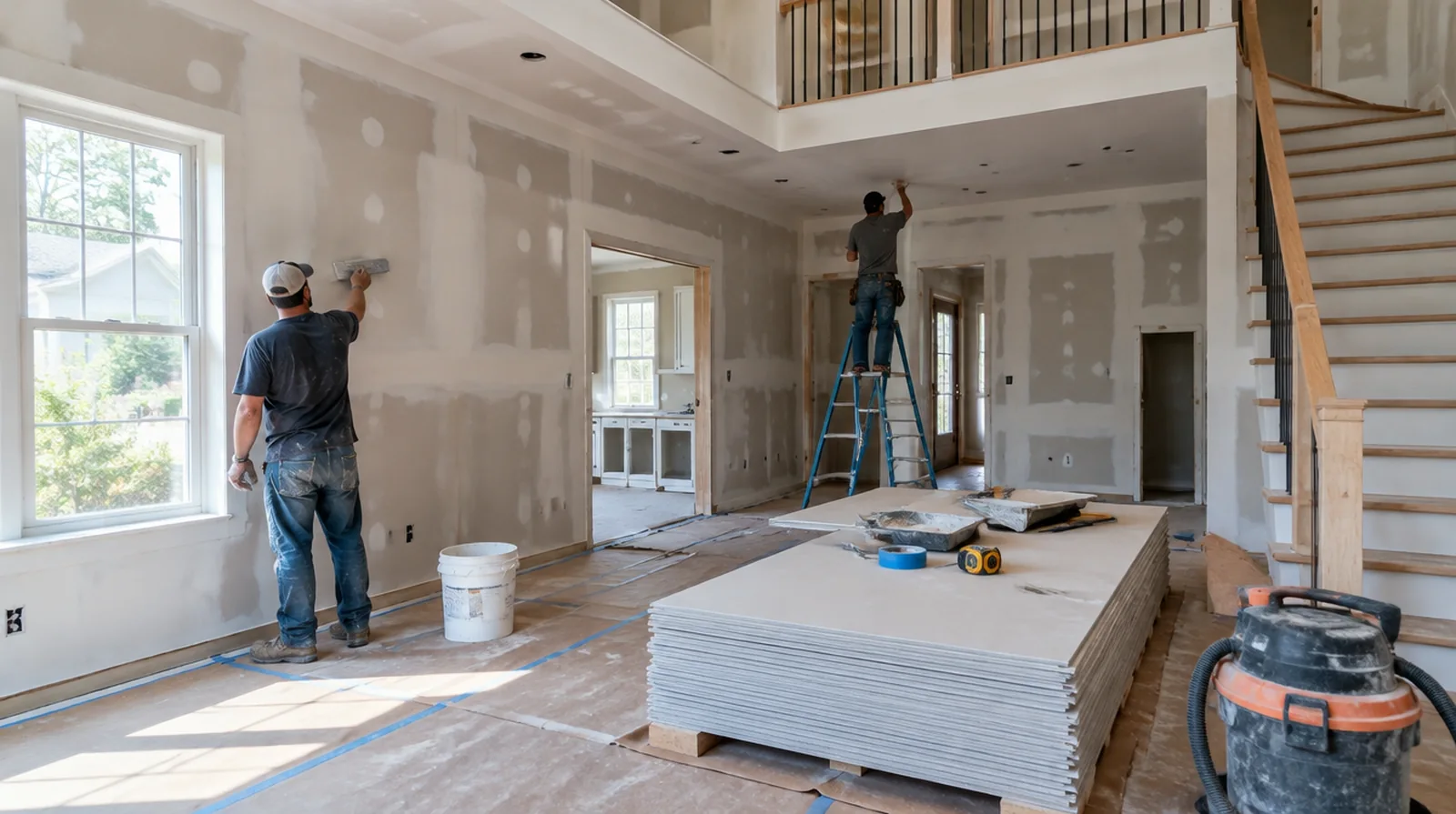
Document recurring movement
Cracks that return after cosmetic repairs deserve a conversation about movement or moisture rather than another quick cover. A drywall estimate should state when another trade needs to investigate before surface work proceeds. When the wall surface has strong reflected light, look at the full plane rather than judging only the narrow strip immediately beside the patch.
Choose the patch boundary
Loose paper and crumbling gypsum must be removed until the surrounding panel can support a durable repair. A tidy rectangular cut often provides stronger backing than following an irregular broken edge. Where the wall meets fixed furniture, clarify whether removal is included or whether the finish will terminate at the accessible edge.
Prepare for primer
The absorbency of fresh drywall finishing material differs from that of the painted surface beside it. Confirm whether the quote includes priming or ends with a sanded surface ready for the painter. For a project involving a building manager, confirm access hours and protection requirements before promising a start date or a short completion window.
Handle small fastener marks
A bump over a fastener may reflect separation or movement at the panel support. Adding appropriate fastening nearby may be necessary before the damaged spot receives finishing compound. If the coating stability is unclear, assess which layers are adequately bonded and which should be removed instead of simply hidden beneath new material.
Review with side lighting
Use an angled view as well as a direct view when reviewing a finished patch. Window light may reveal a contour that ordinary room lighting hides, while paint sheen creates an independent issue. When painting is outside the proposal, describe the remaining decorative preparation clearly so another contractor can price that stage accurately.
Build thin finishing coats
Shaping a repair through thinner coats gives more control than depositing all the material at once. Judge the previous layer only after it has dried sufficient for the next operation. Where a surface has been painted many times, consider whether differences in texture or sheen will require a wider decorative treatment.
Set the paint boundary
An old paint coating may not accept an inconspicuous local touch up even after a flat repair. Consider a corner to corner decorative boundary when color or sheen differences would otherwise remain noticeable. If access passes through a shared space, arrange protection and a delivery route that do not unnecessarily obstruct other occupants.
Protect adjacent surfaces
Small wall repairs can still distribute fine dust through the space if protection is inadequate. Identify the possessions to move and agree which adjacent spaces need to stay usable. Where a neat final edge matters, agree whether the finish ends against existing trim or whether that trim will be removed and replaced.
Feather beyond the opening
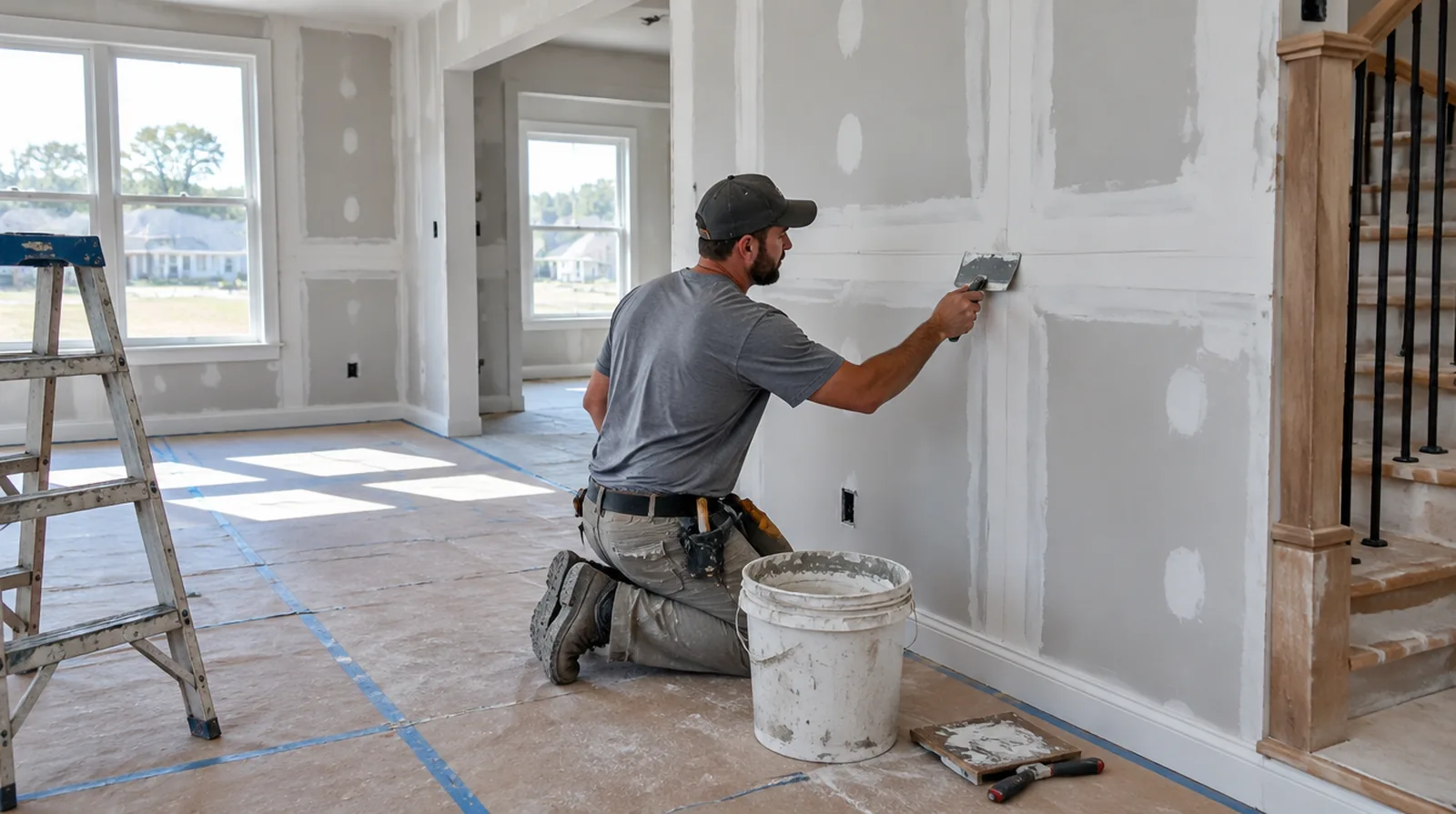
The noticeable finishing area generally extends farther than the hole because a gradual taper hides the repair edge. The gradual transition is especially important where a window lights the surface from the side. Where a surface has been painted many times, consider whether differences in texture or sheen will require a wider decorative treatment.
Support the replacement
A substantial hole is normally rebuilt with board and proper support, not filled entirely with finishing material. The replacement board thickness should match the current face so the joint can finish level. If materials must cross common building areas, plan the protection and access route so other occupants are not needlessly obstructed by deliveries.
Project context in Hoover
Painting the full wall after a foyer repair gives a more even result than spotting the patch alone. High windows in Hoover family rooms throw raking light across big walls, which shows small ridges in a finished joint.
Scope questions before finishing
If the space will remain occupied, identify a practical separation between the work area and the space that still needs daily access.
When panel replacement exposes a cavity, resolve any required inspection before that opening is closed and the finishing work begins.
While a removed panel exposes the wall surface cavity, complete the necessary review of concealed work before replacement board closes the opening.
If the original finish is unusual, keep a small reference sample or a close photograph to support the discussion about blending and restoration.
When photographs are used for an initial discussion, include a wide room view as well as a close view so scale and surrounding finishes are understandable.
In a room with little free floor space, identify temporary storage for belongings and establish sufficient clearance for the work before delivery.
If access passes through a shared space, arrange protection and a delivery route that do not unnecessarily obstruct other occupants.
If a room has only limited ventilation, discuss how the finishing materials can dry without disrupting comfort or spreading dust elsewhere.
For a small repair with extensive setup, compare the total scope instead of assuming the price should follow the hole dimensions alone.
When the project space includes a doorway, check the clearance for panel movement as well as the amount of space available for finishing tools.
At a ceiling or wall containing fittings, assign removal and reinstatement duties for the affected devices before repair access is needed.
At a surface receiving strong window light, review a dried trial from the side in addition to the normal straight view of the wall.
Explore the Hoover drywall overview for related options, or read the project planning information before arranging the next stage.
More planning details for Hoover
Humid Alabama summers slow drying, and keeping the air conditioning running between coats usually helps. Steep driveways on Hoover hillsides can make unloading board harder, so pick a staging spot before delivery. Bonus rooms over garages see wide temperature swings, which can crack seams where the knee wall meets the slope.