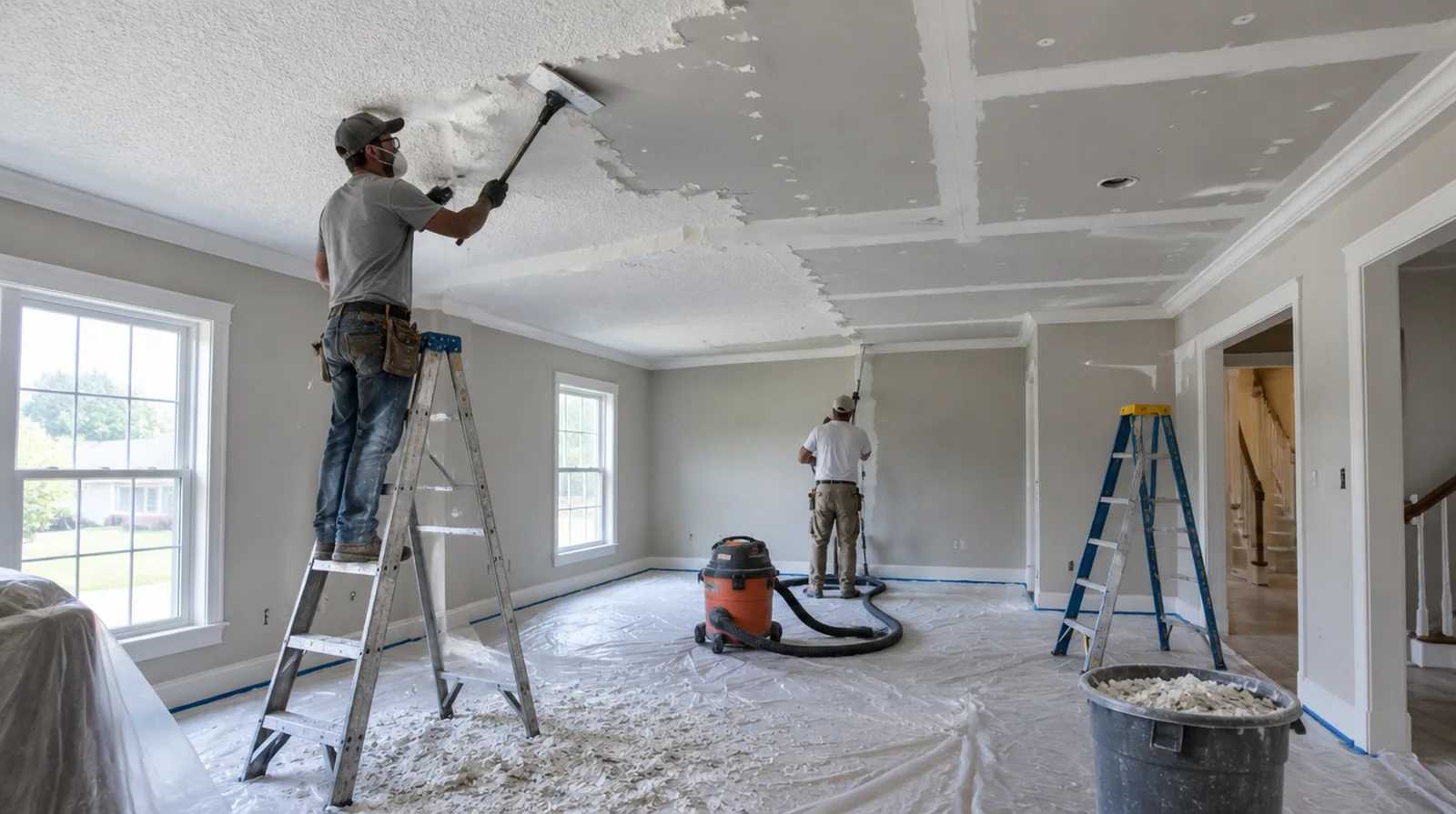
Choose the final surface
The intended replacement finish should be selected before the removal and restoration work is priced. Decide the intended appearance before pricing so the finishing work supports the right result. At a surface receiving strong window light, review a dried trial from the side in addition to the normal straight view of the wall.
Check for painted coatings
Previously painted popcorn texture may resist simple wetting and require a differing removal approach. Assess a controlled test area so the method, labor and potential substrate repairs are understood. While a removed panel exposes the wall cavity, complete the necessary review of concealed work before replacement board closes the opening.
Review ceiling condition
A textured ceiling can hide old repairs and seams that were never prepared for a smooth appearance. Allow for assessment and further finishing after safe removal exposes the original face. For a wall receiving a decorative covering, provide its preparation requirements early sufficient for the drywall finish to support that product.
Establish material safety
Older textured ceiling coatings may contain asbestos and should never be scraped without appropriate evaluation. Where asbestos could be present, arrange suitable testing and follow the applicable process before removal begins. While a removed panel exposes the wall cavity, complete the necessary review of concealed work before replacement board closes the opening.
Protect the entire room
Overhead coating removal can distribute debris throughout the space unless protection is comprehensive. Review furniture removal, masking and the route used to carry materials out of the property. For a limited patch requiring substantial setup, assess the complete package of access and protection rather than relating cost only to the opening size.
Separate specialist work
Confirmed hazardous material removal is not an ordinary drywall scraping task. A suitable specialist should define containment, handling and disposal before any finish restoration is planned. When the same defect has returned, share information about previous repair methods so the next assessment can consider why they did not last.
Plan cleanup and reopening
The room should be reviewed after debris removal and the agreed finishing steps are complete. Allow for drying and painting time instead of assuming the space is usable immediately after scraping. When photographs are used for an initial discussion, include a wide room view as well as a close view so scale and surrounding finishes are understandable.
Plan fixture coordination
Light fittings, alarms and other ceiling devices could need separate handling by the appropriate trade. The scope should identify who disconnects and reinstalls them rather than leaving that responsibility unclear. Where light reflects along the wall, inspect the complete plane instead of limiting the review to the edge immediately next to the repaired section.
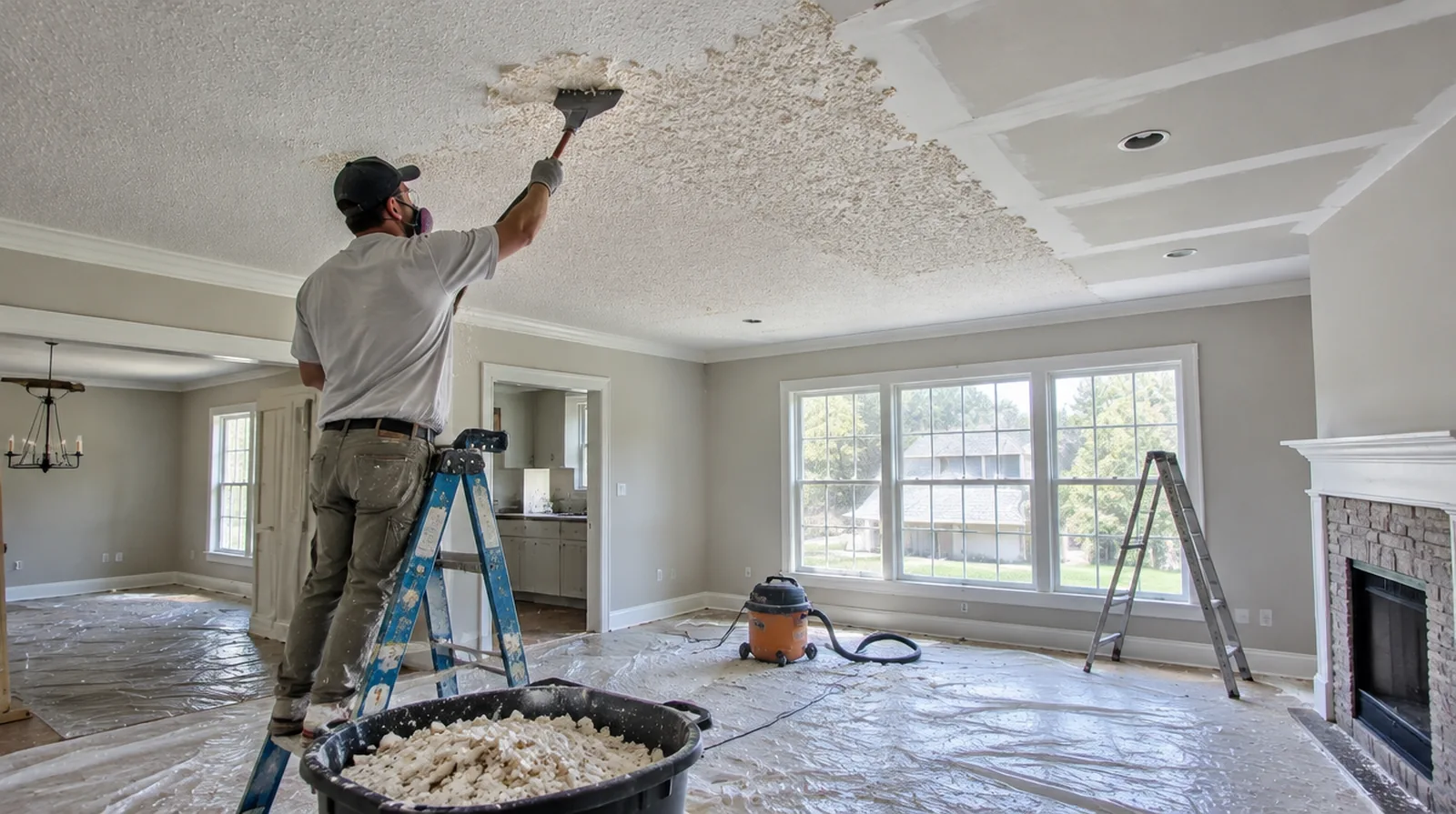
Repair exposed imperfections
Removal can uncover damaged paper or shallow defects that must be stabilized before finishing. Discuss an allowance for those repairs before the decorative coating has been taken down. When a wall has repeated defects, keep a record of earlier repair attempts so a new assessment does not simply repeat an unsuccessful approach.
Confirm primer and paint
The newly exposed and repaired ceiling needs an suitable coating plan after it dries. Define whether decoration is included or whether the drywall handover ends at preparation for coatings. For walls beside bright windows, review a dry sample from an oblique angle as well as looking straight at the repaired surface.
Project context in Hoover
Agree on how the finished wall should look from the front door and the stairs before the final coat goes on. High windows in Hoover family rooms throw raking light across big walls, which shows small ridges in a finished joint.
Scope questions before finishing
For a repair that crosses several surfaces, measure the affected planes separately so the estimate can explain where each finishing treatment starts and stops.
At a repair beside an opening, allow clearance for moving board through the doorway and space to use the finishing tools effectively.
For a project with several trades, agree which inspection or handover point must happen before the next person starts work.
For an older repair with no clear history, describe when the mark first appeared and whether it has changed through more than one season.
Where a neat final edge matters, agree whether the finish ends against existing trim or whether that trim will be removed and replaced.
If a room has only limited ventilation, discuss how the finishing materials can dry without disrupting comfort or spreading dust elsewhere.
If scheduling is the main concern, separate hands on labor from drying intervals instead of treating every visit as a full day of active work.
For a surface that will receive wall covering, share the product requirements early so the finishing stage supports the planned decorative treatment.
When photographs are used for an initial discussion, include a wide room view as well as a close view so scale and surrounding finishes are understandable.
If the coating stability is unclear, assess which layers are adequately bonded and which should be removed instead of simply hidden beneath new material.
If the space will remain occupied, identify a practical separation between the work area and the space that still needs daily access.
For a room that stays in use, set a workable boundary around construction while retaining the access people need for normal daily activities.
Explore the Hoover drywall overview for related options, or read the project planning information before arranging the next stage.
More planning details for Hoover
HOA communities in Hoover may limit contractor parking or working hours, so check the rules early. Humid Alabama summers slow drying, and keeping the air conditioning running between coats usually helps. Painting the full wall after a foyer repair gives a more even result than spotting the patch alone.