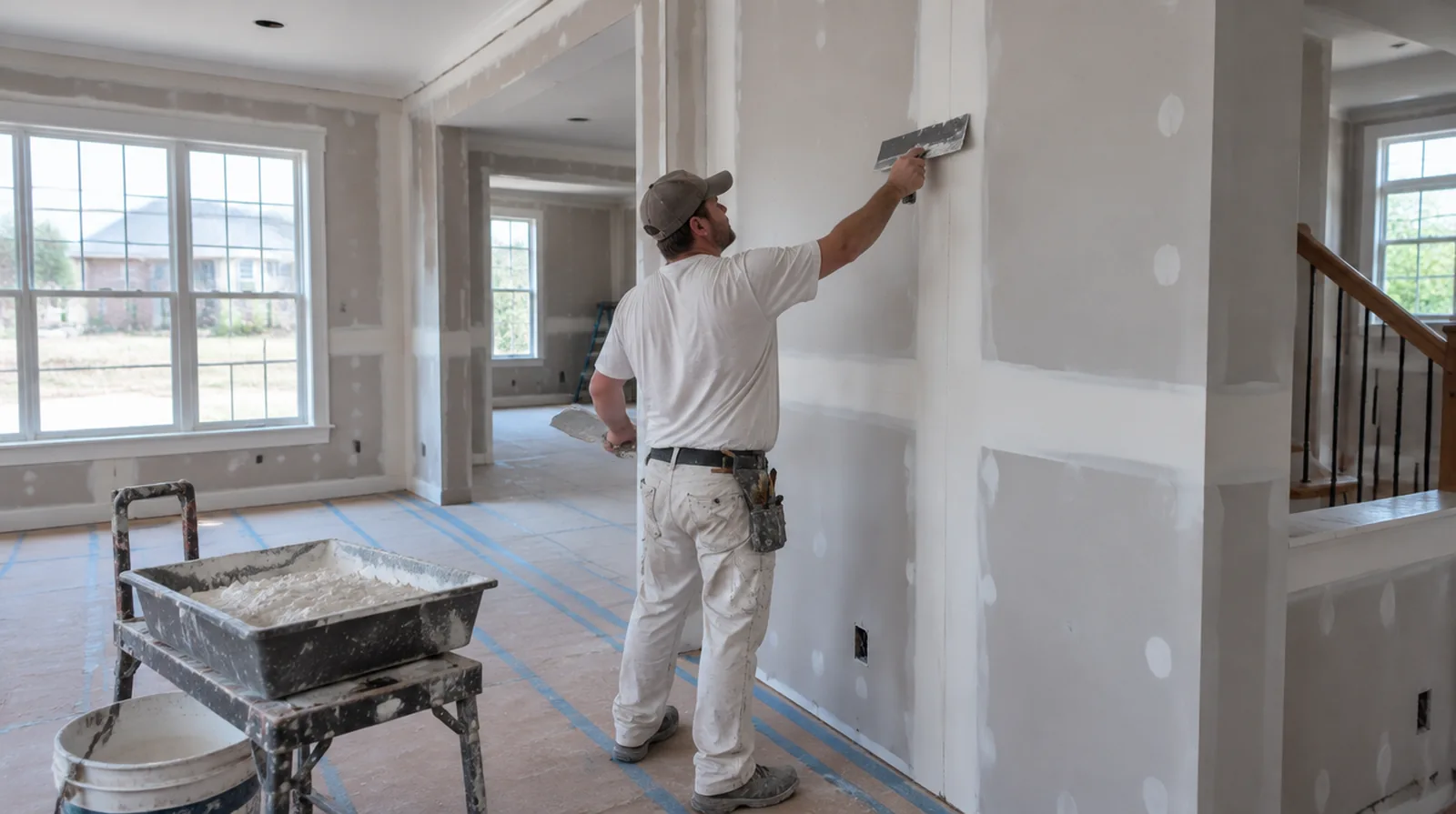
Hoover suburbs and two-story homes
Hoover spreads south from Shades Mountain toward the Cahaba River, and much of it was built from the 1970s onward. Bluff Park holds older homes on the ridge, while Riverchase, Ross Bridge, Trace Crossings, Greystone and Lake Cyrus are filled with two-story houses, bonus rooms and open foyers. Newer neighborhoods tend to have smooth or lightly textured walls, while some older homes near Bluff Park still have heavier hand textures that take patience to match.
Alabama heat and summer humidity
Hoover summers are long, hot and humid, with mild winters and plenty of spring rain. High indoor humidity slows compound drying, especially in a room where the air conditioning has been turned down to save energy during the job. Keeping the system running and adding a fan usually shortens the wait between coats. Bathrooms, laundry rooms and finished basements on sloped lots benefit from moisture-resistant board when they are opened up.
Tall foyers and working at height
Open foyers and two-story family rooms are common across Hoover, and the cracks or nail pops on those walls usually sit well above a step ladder. Reaching them safely means planning scaffolding or a stair platform that does not scratch treads or rails. Light from high windows rakes across these big walls and shows every ridge in a joint, so finishing needs to be tighter than it would be in a small bedroom.
What gets decided up front
If the existing finish is unusual, keep a small reference sample or a close photograph to support the discussion about blending and restoration.
Where existing floors will remain, specify protective measures and review the path used by panels, equipment and finishing tools.
Control application conditions
Compound consistency and application distance affect how a sprayed pattern lands on the wall. A knockdown pass also depends on when the applied material reaches the right condition in that room.
Plan cleanup and reopening
Allow for debris removal, drying and decorating rather than assuming the interior is complete immediately after scraping. Review the agreed surface condition and cleanup before returning the interior to normal use.
Stabilize torn paper
Exposed drywall paper can bubble when it receives wet compound without suitable preparation. Stabilize those paper defects with an suitable treatment before beginning the broad skim application.
Build the seam gradually
Make later joint coats progressively broader so the transition becomes less abrupt. Butt joints typically need a broader blend because they lack the recessed edges of factory seams.
Prepare for primer
The absorbency of fresh drywall finishing material differs from that of the painted surface beside it. Establish whether suitable primer is part of the repair or will be applied by another contractor.
Inspect before decoration
The most useful final review happens after the surface is dry and before cabinets or wall coverings hide the edges. Use the agreed lighting and note any further preparation the painter should expect.
About the illustrations
The website images are generated examples of drywall interiors and methods, not photographs of completed customer work. No customer reviews or qualifications are implied. The project form and the telephone shown on this page connect you with the next project conversation.
Explore the drywall services or view the address and map.
More planning details for Hoover
Hoover foyers often rise two stories, so repairs on those walls need scaffolding that protects the stair treads and rails. Some older homes near Bluff Park have heavier hand textures that take a test patch to match well. HOA communities in Hoover may limit contractor parking or working hours, so check the rules early.